
Headless Commerce vs Traditional Ecommerce for Modern Enterprises
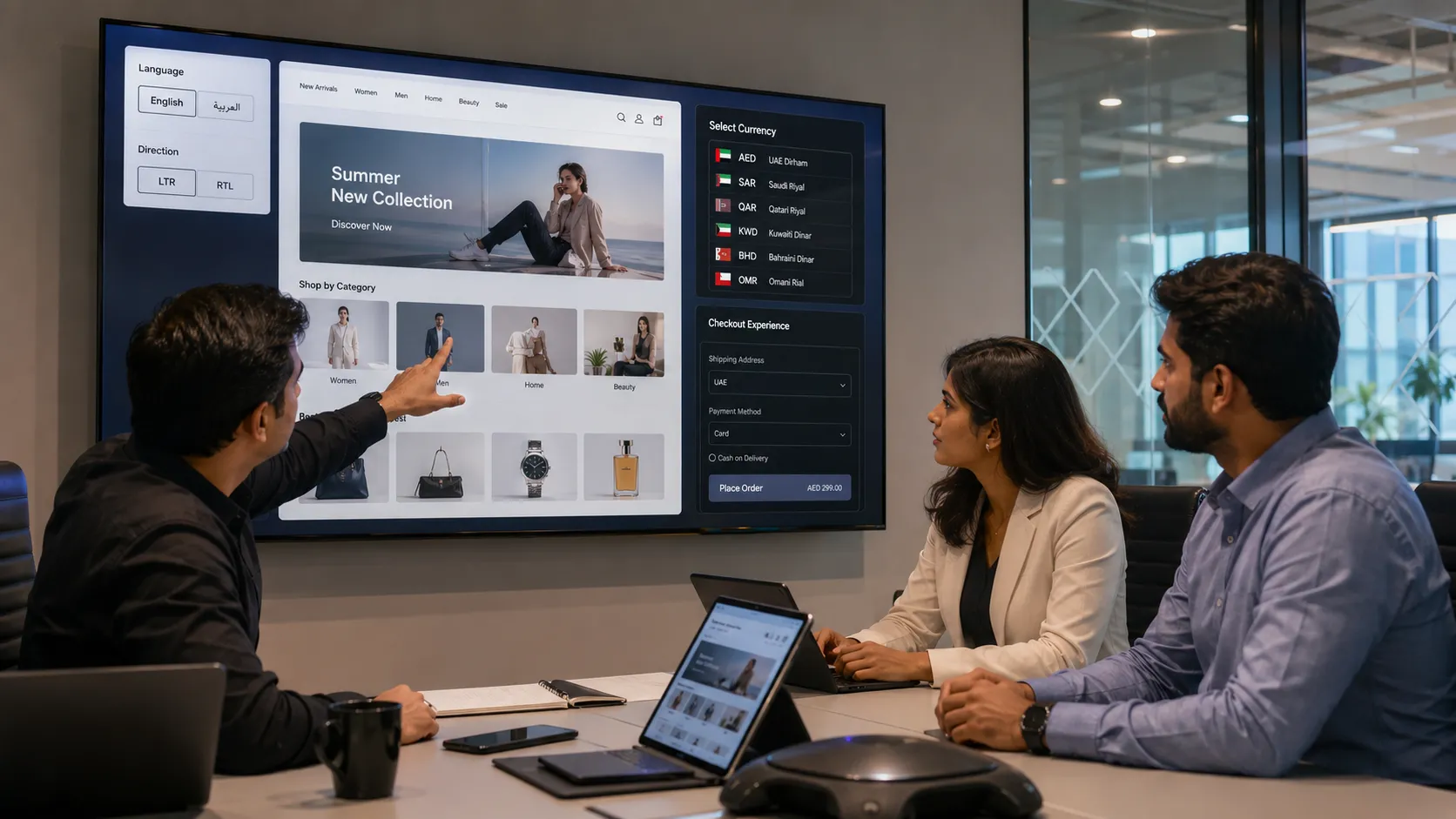
The modern digital storefront is undergoing a structural shift. For years, scaling brands relied on monolithic platforms to manage everything from the database to the user interface. But as consumer expectations soar, particularly across highly competitive digital landscapes like the UAE and the broader GCC, these all-in-one frameworks have turned into operational anchors.For decision-makers evaluating headless commerce vs traditional ecommerce, the choice isn't just about technical architecture; it’s about market velocity and long-term capital efficiency.
When your marketing team requires weeks of development time just to launch a localized landing page, or when a surge in mobile traffic compromises checkout performance, your infrastructure has hit its ceiling. Moving forward requires a clean break from rigid frameworks toward agile, composable architecture.
TCO Analysis: Headless Commerce vs Traditional Ecommerce
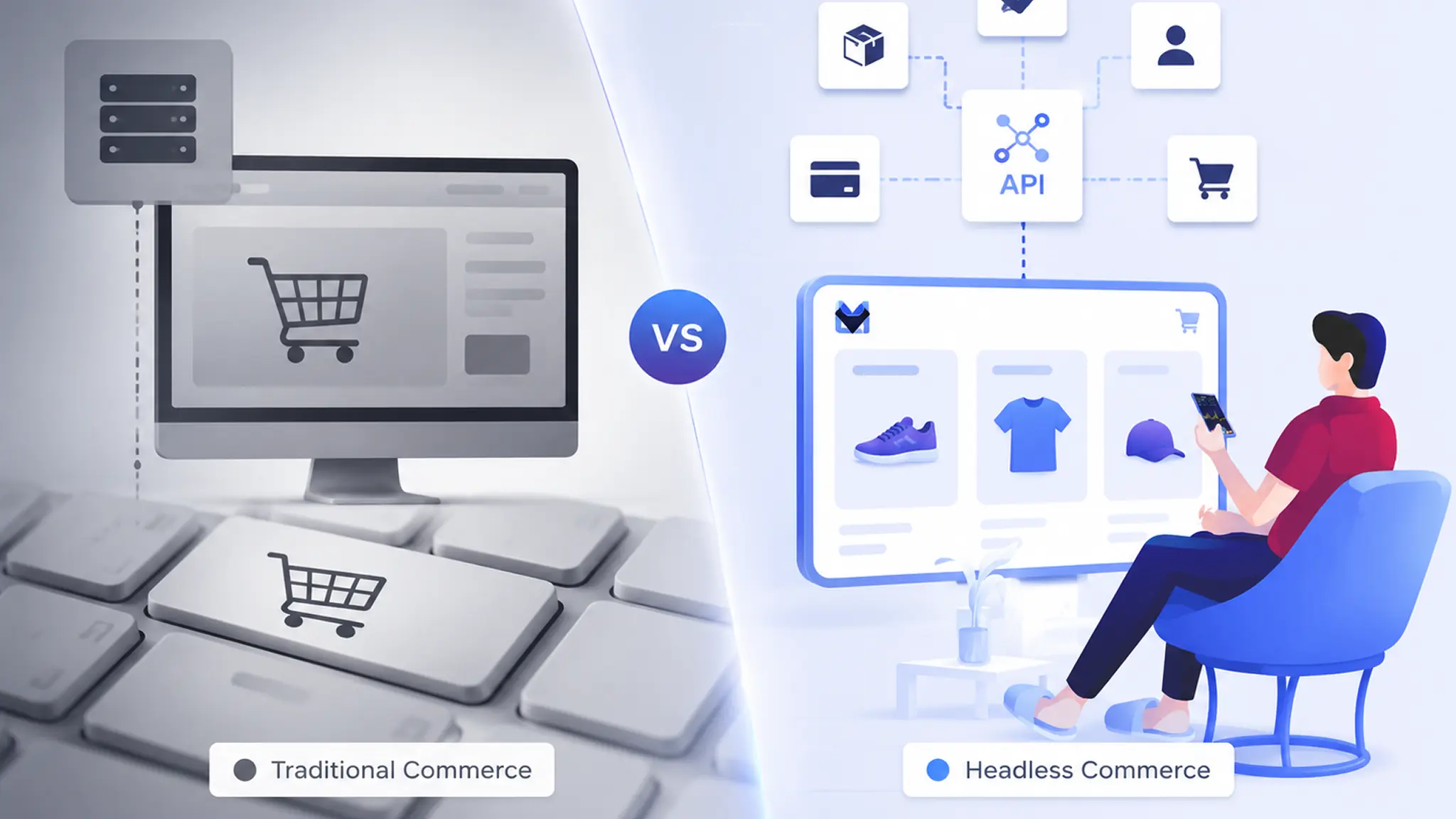
Traditional ecommerce suites bundle the backend database, business logic, and frontend presentation layer into a single, tightly coupled codebase. In the early stages of business growth, this out-of-the-box simplicity keeps initial deployment costs low.
However, as transactions scale, the total cost of ownership (TCO) begins to climb exponentially. Because the frontend and backend are inseparable, a minor styling adjustment on a mobile product page forces a full deployment of the entire core system. This structural rigidity introduces substantial technical debt, dragging down deployment velocity and forcing senior engineering talent to focus on routine stability maintenance instead of revenue-generating feature development. When every visual optimization introduces a risk of system-wide downtime, innovation naturally stalls.
The Architectural Divide
To build an adaptable digital ecosystem, enterprise brands in Dubai, Riyadh, and the wider region must look beyond the constraints of legacy platforms. Modern headless ecommerce architecture separates the frontend user experience entirely from the core backend commerce engine, connecting them dynamically via high-speed, secure APIs and modern GraphQL mesh layers.
This structural separation transforms how growing brands scale their operations:
- Omnichannel agility: Design teams can launch bespoke user interfaces, mobile apps, and unique digital touchpoints without ever modifying the underlying inventory or checkout databases.
- Performance Optimization: Frontend experiences can be deployed as lightweight Progressive Web Apps (PWAs) or serverless static builds, served from global edge networks for instantaneous page load speeds.
- Independent scalability: Because frontend traffic surges are isolated from backend transactional systems, a massive marketing campaign won't strain payment processors or warehouse management software.
Financial and Operational Metrics
Upgrading infrastructure requires looking past initial implementation costs to evaluate strategic ROI, system longevity, and long-term ecosystem stability.
Financial and Operational Metrics
Upgrading infrastructure requires looking beyond initial implementation costs to evaluate strategic ROI, system longevity, and long-term ecosystem stability.
| Performance & Cost Metrics | Traditional Frameworks | Headless Commerce |
|---|---|---|
| Initial Implementation | Lower upfront cost; rapid deployment using rigid templates. | Higher initial setup and integration investment. |
| Site Performance & Speed | Restricted by platform bloat; harder to optimize globally. | Near-instantaneous; highly optimized via regional edge computing. |
| Development Dependencies | Tightly coupled; updates carry risk of backend disruption. | Fully decoupled; frontend and backend teams deploy independently. |
| Upgrades | Forced vendor updates can break custom code modifications. | Seamless; backend API upgrades occur quietly without UI risk. |
Enterprise Readiness
Migrating to a composable ecosystem isn't a simple plug-and-play upgrade; it is a strategic business transformation. To assess whether your enterprise is prepared for this shift, benchmark your current operations against three key performance bottlenecks:
- Experience fragmentation: Your internal teams struggle to maintain a unified, lightning-fast shopping experience across desktop, native mobile applications, and emerging customer touchpoints.
- Deployment Velocity: Simple marketing updates or landing page rollouts are bottlenecked by multi-week developer QA cycles due to the inherent risks of monolithic deployments.
- Conversion Friction: Rigid, out-of-the-box checkout flows restrict your ability to run data-driven personalization experiments or optimize checkout paths, directly impacting your average order value.
Accelerating Composable Infrastructure with Forchunex
Transitioning away from a legacy platform requires a strategic engineering partner who balances backend performance with bottom-line growth. Forchunex designs and implements scalable, composable digital infrastructure tailored explicitly for enterprise operations across the UAE and GCC regions. Our engineering teams remove architectural complexity, replacing brittle monoliths with secure, high-velocity API-driven frameworks optimized for local consumer preferences.
From custom frontend builds to serverless integrations and localized payment pathways, including seamless integrations with regional payment gateways like Magnati, Network International , and HyperPay , we engineer ecosystems that reduce long-term maintenance overhead while maximizing site speed. Don't let rigid, outdated systems set the limit on your brand's growth velocity. Partner with Forchunex to modernize your UAE infrastructure, eliminate technical debt, and unlock your true scaling potential.
Frequently Asked Questions
-
1.
Does moving to a headless setup require rebuilding our entire backend
database?
Not necessarily. A migration can be approached in distinct phases. Many enterprises choose to keep their existing database or ERP logic fully intact while building an API abstraction layer over it to power a brand-new, high-speed, modern frontend experience. -
2. How does a decoupled architecture influence mobile conversion
rates?
By decoupling the frontend, you can deploy lightweight web experiences, such as Progressive Web Apps (PWAs). These deliver sub-second loading speeds and fluid, native-app-like interactions that directly remove friction from your checkout funnel and boost conversion metrics. -
3. What are the primary management challenges of a composable system?
The challenge shifts from dealing with rigid code to managing a network of specialized services. Because the frontend and backend operate independently, your team will rely on APIs, requiring clean documentation and an experienced engineering partner to oversee integration, monitoring, and performance tracking. -
4. Is headless architecture suitable for B2B commerce operations?
Yes, it is highly effective for B2B models. B2B operations frequently require intricate pricing structures, custom client portals, and deep ERP integrations. A decoupled approach allows you to build highly tailored frontend interfaces for clients without putting a strain on or disrupting your core backend business logic.