
Build vs Buy Software and Finding the Right Fit for Your Business
Every quarter, enterprise technology budgets across Dubai and Abu Dhabi face a critical crossroads. Executive leadership reviews mounting software subscription lines alongside a backlog of unresolved localized features, coming to a frustrating realization: the organization pays top-dollar for tools that only solve 70% of unique Middle Eastern operational realities.
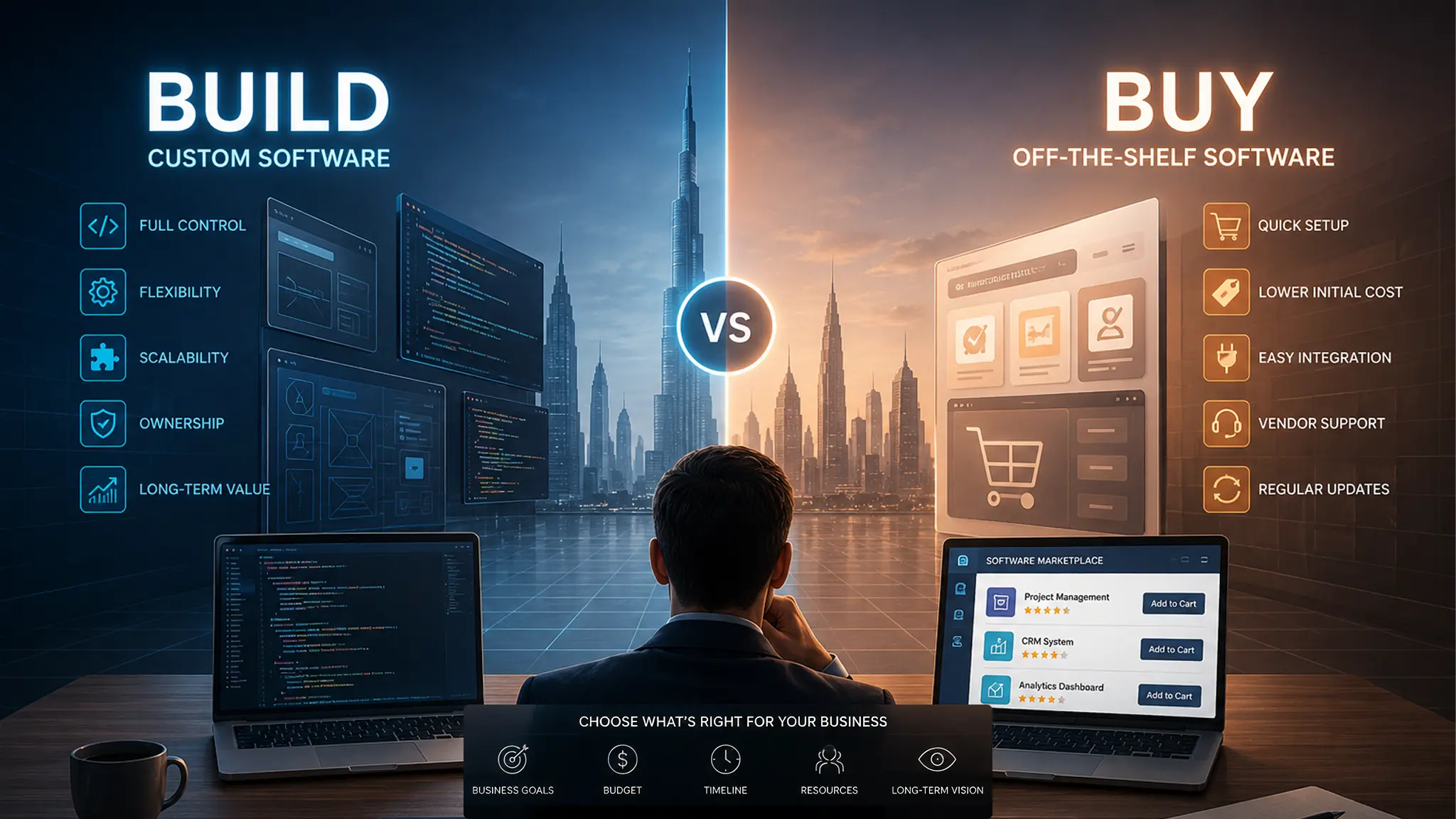
The remaining 30% is left patched together by brittle internal scripting, manual spreadsheets, and fragile middleware. This operational friction points directly to the classic build vs buy software dilemma, an architectural choice defining your long-term operational velocity.
For regional tech leaders, choosing between engineering customized platforms or licensing external applications is a high-stakes capital-allocation decision. It directly influences your corporate valuation, defense against market disruption, and systemic scale in a hyper-competitive local market. Settling on the incorrect path creates permanent technical debt that severely restricts your future corporate agility.
Outgrowing the Software You Once Relied On
The value proposition of licensing a ready-made third-party vendor tool appears obvious: immediate time-to-market, predictable upfront subscription modeling, and baseline industry-standard features.
For non-core utility operations such as corporate communication platforms, standard payroll engines, or baseline HR filing systems, the argument for buying is undeniable. It makes little sense to deploy expensive internal engineering resources to build standard operational infrastructure from scratch.
However, the calculation shifts dramatically when dealing with core workflows, unique regional logistics, or proprietary data processing logic. Relying entirely on prefabricated systems forces a UAE organization to adapt its unique operational processes to the rigid constraints of a generic platform, instead of tailoring the tech stack to scale its local competitive advantages. Over time, businesses run into functional limitations, pay steep premium integration tolls, and face escalating seat-based fees that quickly erode initial cost savings.
Why Custom Software Development is the Only Way to Own Your Local Market Data
When a business process directly impacts local user retention, proprietary logistical pipelines across the GCC, or specialized regional monetization, settling for generic frameworks stalls corporate growth.
Custom-built platforms allow businesses to own their technology, intellectual property, and development roadmap while creating solutions specifically designed around operational requirements.
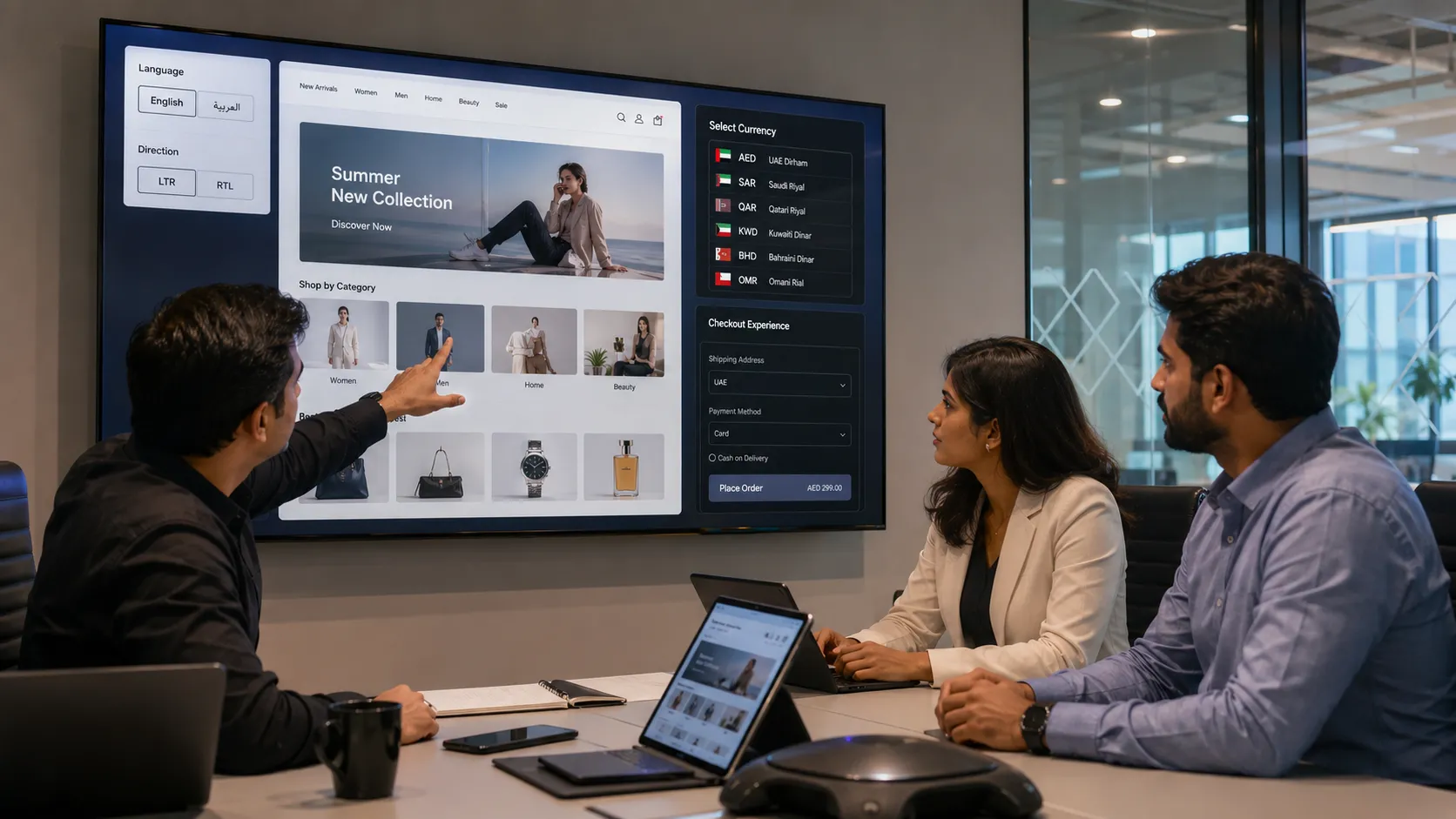
Investing in custom software development allows an organization to design, deploy, and completely own its intellectual property. This ensures every automated loop, cloud architecture decision, and right-to-left (RTL) bilingual user interface maps perfectly to strategic business priorities.
By moving toward tailored, high-performance web ecosystems or serverless cloud infrastructures, companies achieve complete technological independence while strictly adhering to local data residency mandates set by the Telecommunications and Digital Government Regulatory Authority (TDRA). Owning your code baseline means your internal team can instantly push feature iterations or critical security patches, instead of filing support tickets and waiting on a global vendor’s slow product roadmap. Furthermore, building proprietary digital infrastructure converts standard operational expenses into long-term capital assets.
The Technical Diligence Checklist
To prevent costly mid-development pivots, leadership teams in the Gulf require a highly structured, objective framework to assess architectural viability before signing an external software contract.
The software decision process relies heavily on a single, focused evaluation loop:
- Core Value Vector: If the platform under review touches your primary monetization loop or handles proprietary operational logic, custom engineering is required.
- Total Cost of Ownership (TCO) Horizon: Leaders must look past initial setup fees to analyze multi-year projections, mapping out API data volume costs and vendor renewal escalations over an 18-month amortization window.
- System Interoperability & Integration: Seamless software integration ensures that new tools talk to legacy regional data storage warehouses instantly without requiring slow middleware layers.
- Scale Architecture:Bespoke systems adapt natively to sudden transaction spikes and massive regional data growth, completely avoiding restrictive API throttling rules.
Getting More from Your Technology Investments >
Navigating complex technical evaluations and executing sophisticated engineering roadmaps requires deep architecture expertise. At Forchunex, we partner with mid-market and enterprise organizations across the UAE to solve intricate modernization challenges.
Whether your current operational structure demands an expert, highly stable software integration setup to unite legacy tools or requires a complete, ground-up custom software development lifecycle, our specialized engineering units deliver premium velocity and precision.
Collaborating with Forchunex allows your leadership team to mitigate technical risk, optimize capital efficiency, and build a highly scalable, high-performance software footprint designed for long-term operational dominance in the region. Let our team transform your technology into a decisive engine of growth. Contact Forchunex today to baseline your enterprise architecture roadmap.
Frequently Asked Questions
-
1. How can we accurately compute multi-year TCO for custom builds versus
licensed vendor platforms?
For vendor platforms, factor in a predictable 5–15% annual subscription escalation, seat expansion costs, and internal labor required to maintain configurations. For custom builds, balance upfront capital against minimal ongoing infrastructure costs, factoring in 15–20% of initial development costs annually for updates. -
2. Can organizations successfully leverage a hybrid architecture
model?
Absolutely. Modern enterprise tech stacks routinely use hybrid architectures. The most common structure uses reliable commercial platforms for commoditized administrative backend workflows (like billing) while focusing core engineering hours on proprietary custom frontends and customer-facing interfaces that directly drive revenue. -
3. What are the earliest warning signs that licensed software has reached
its limit?
Clear indicators include operational teams spending significant time building manual workarounds (like disconnected Excel sheets), rapidly increasing middleware licensing costs, or an inability to deploy critical customer experience updates because third-party API limits prevent necessary data synchronization. -
4. Can custom software integrate with our existing systems and
third-party tools?
Yes. Custom software can be designed to integrate seamlessly with your existing technology stack, including ERP systems, CRM platforms, payment gateways, cloud services, and other third-party applications. By connecting data and workflows across systems, businesses can reduce manual processes, improve operational efficiency, and create a more unified experience for both employees and customers.